
Pharmacopoeial standards are now central to approvals in the Gulf, and with the 11th edition of the Ph.Eur containing over 2,500 monographs, we see more regulators and auditors in GCC expecting ethanol suppliers to align with these specifications for pharmaceutical and high purity applications.
For medical grade ethanol and related solvents, this shift directly affects how fast you can place products on the market and how confidently you can defend quality specifications in audits across Saudi Arabia and the wider GCC.
Key Takeaways
| Question | Answer |
|---|---|
| What is Ph.Eur certification in the context of GCC? | It is the documented compliance of a solvent, such as pharmaceutical grade ethanol, with European Pharmacopoeia monographs, which GCC authorities increasingly use as a reference during registration and audits. |
| Why does Ph.Eur matter for ethanol used in pharma and labs? | Ph.Eur defines impurity limits, identification tests, and assay requirements, which are crucial for high purity ethanol used in APIs, excipients, chromatography and sensitive analytical methods. |
| How does certification support GCC market access? | Ph.Eur-compliant documentation makes it easier to pass regulatory reviews and internal audits, particularly when buying bulk ethanol in formats like IBC tanks of medical grade ethanol 99.9%. |
| Which GCC users benefit most? | Pharma manufacturers, hospital central pharmacies, contract labs, cosmetic formulators, and the fragrance industry that require controlled ethanol solvent quality for regulatory or brand reasons. |
| Can Ph.Eur-aligned ethanol be sourced locally in Saudi Arabia? | Yes, as a local ethanol manufacturer Saudi Arabia, we operate a production plant focused on pharmaceutical grade ethanol and industrial grades, supplied across GCC through formats like Red Sea Ethanol 99.9% ISO tank. |
| What should I prepare to request a quote? | Share required grade (medical, laboratory, cosmetic or industrial), expected volume, packaging (drum, IBC, ISO tank), delivery location and any specific pharmacopoeial or certification requirements, then Request a Quote from our team. |
1. What Ph.Eur Certification Means for Ethanol in GCC Markets
Ph.Eur certification for ethanol is essentially proof that the solvent matches European Pharmacopoeia specifications for identity, assay, and impurities, supported by validated analytical methods.
For GCC regulators and QA teams, this provides a clear technical baseline for accepting medical grade ethanol, laboratory grade ethanol, and other critical solvents used in regulated manufacturing and testing.
Scope of Ph.Eur for Ethanol and Solvents
The European Pharmacopoeia 11th edition includes thousands of texts on active substances, excipients, and reagents, and ethanol sits within this framework as a solvent with defined purity expectations.
For buyers in Saudi Arabia, UAE, and other GCC states, referencing these standards helps align internal specifications with widely accepted global criteria.
Why GCC QA and RA Teams Care
Regional authorities often accept or reference Ph.Eur when assessing imported or locally produced pharmaceutical inputs.
If you are qualifying an ethanol supplier Middle East, Ph.Eur-conformant documentation gives your regulatory affairs team a familiar language to use during registration and variations.
2. GCC Regulatory Context: From GSO Standards to Pharmacopoeial Alignment
GCC standardization bodies and national regulators increasingly rely on harmonised references such as Ph.Eur when defining solvent requirements for pharmaceuticals and some high risk cosmetics and disinfectants.
At the same time, the Gulf Standardization Organization (GSO) coordinates regional technical regulations that indirectly impact how pharmaceutical grade ethanol is specified and accepted.
Regional Harmonisation and Ph.Eur
The Pharmacopoeial Discussion Group (PDG) continues to broaden global harmonisation, and Ph.Eur is a core member in that process.
As more GCC decisions lean on harmonised monographs, ethanol producers and importers who can demonstrate Ph.Eur-style control gain a clear advantage in reliability and predictability of approvals.
Implications for Ethanol Users in GCC
For a pharmaceutical ethanol supplier GCC, aligning with Ph.Eur simplifies export across multiple states using a single technical framework.
For buyers, sourcing from a bulk ethanol supplier whose quality system mirrors Ph.Eur requirements reduces the risk of non conformity findings during inspections.
3. Why Ph.Eur-Grade Ethanol Matters for Pharmaceutical and Medical Applications
Pharmaceutical and hospital buyers work with a narrow risk margin, so the solvent quality behind an API, disinfectant, or diagnostic kit is critical.
Ph.Eur-style specifications for absolute ethanol 99.9% and related grades help ensure low levels of organic impurities, water, and residues that could otherwise impact product performance.
Key Use Cases in GCC
- Ethanol for medical disinfection and ethanol for hospital sanitization, where consistency, residue profile, and evaporation rate are controlled.
- Ethanol for antiseptic production and ethanol for hand sanitizer, which depend on predictable purity and absence of non specified contaminants.
- Ethanol for laboratory use, including sensitive methods and sample preparation where background solvent noise must be minimized.
Analytical and Bioavailability Considerations
In pharma manufacturing, ethanol may influence solubility, controlled release profiles, and impurity carryover, especially in modified release or targeted delivery systems.
Using a high purity ethanol that respects pharmacopoeial limits reduces uncertainty in dissolution behavior, impurity profiles, and chromatographic baselines.
This infographic highlights the 5 key benefits of Ph.Eur-grade solvents for GCC market access. Learn how certification can streamline regulatory clearance and ensure solvent quality.
4. Ph.Eur and GCC Conformity Timelines: Planning Market Entry
Most Gulf Mark certifications are reported to take around four to six weeks, which means that incomplete or weak documentation around solvent quality can easily delay your launch or scale up.
When your ethanol specifications are aligned with Ph.Eur from the beginning, it becomes easier to feed consistent data into GSO and national conformity processes.
Coordinating Ph.Eur Documentation With Gulf Conformity
For ethanol used in regulated products, your dossier usually includes certificates of analysis, impurity profiling, and sometimes validation reports that show capability to meet pharmacopoeial limits.
Preparing these in a structured, Ph.Eur-aligned format helps both internal QA and external conformity bodies review your solvent usage quickly.
What We Recommend for GCC Project Planning
When you plan a new product that relies heavily on pharmaceutical grade ethanol or laboratory grade ethanol, lock your solvent specification early and confirm with your supplier that Ph.Eur-related testing is robust and repeatable.
This reduces change control workload later and helps keep time to market in line with your business case for Saudi Arabia and the wider GCC.
5. Ethanol Grades in GCC: Mapping Use Cases to Ph.Eur Expectations
We see frequent confusion in the GCC market between different ethanol grades and their appropriate use, which can lead to mislabeling or unsuitable material being used in regulated processes.
From a Ph.Eur perspective, defining the right grade and associated impurity limits is the foundation of compliance.
Typical Ethanol Grades Relevant to Ph.Eur-style Control
- Pharmaceutical grade ethanol: used in APIs, excipients, oral or topical formulations, and diagnostic reagents that fall under strict quality systems.
- Medical grade ethanol: used in disinfection, hospital sanitization, and antiseptic production where microbiological and chemical cleanliness are tightly controlled.
- Laboratory grade ethanol: used across chromatography, extraction, and general lab procedures, where lot to lot consistency and low background impurities support reproducible data.
- Cosmetic grade ethanol and ethanol for perfume manufacturing: used by formulators who care about odor neutrality, residue, and safe impurity profiles, especially for high end brands.
- Industrial ethanol or bioethanol industrial use: used in cleaning, coatings, and other non pharma processes, often with different regulatory expectations.
Absolute Ethanol 99.9% in GCC Markets
Our absolute ethanol 99.9% products are designed as high purity, low moisture solvents that can support medical, pharmaceutical, and laboratory requirements when paired with the right validation and documentation.
When you specify this material for Ph.Eur-aligned use, we work with your QA and QC teams to confirm analytical methods, impurity profiling, and batch documentation that match your SOPs.
6. Jezyl Medical-Grade Ethanol: Local Ph.Eur-Oriented Supply for Pharma and Hospitals
As a Saudi-based ethanol manufacturer, our medical-grade line is engineered for applications that sit closest to pharmacopoeial expectations, including pharma manufacturing, diagnostics, and hospital environments.
While regulatory classification is handled by our customers, we design our quality systems to align with international pharmacopoeial thinking so that ethanol is not the weak point in your file.
Medical-Grade Ethanol 99.9% Formats
We offer medical-grade ethanol solvent in multiple bulk formats to support diverse demand patterns across GCC:
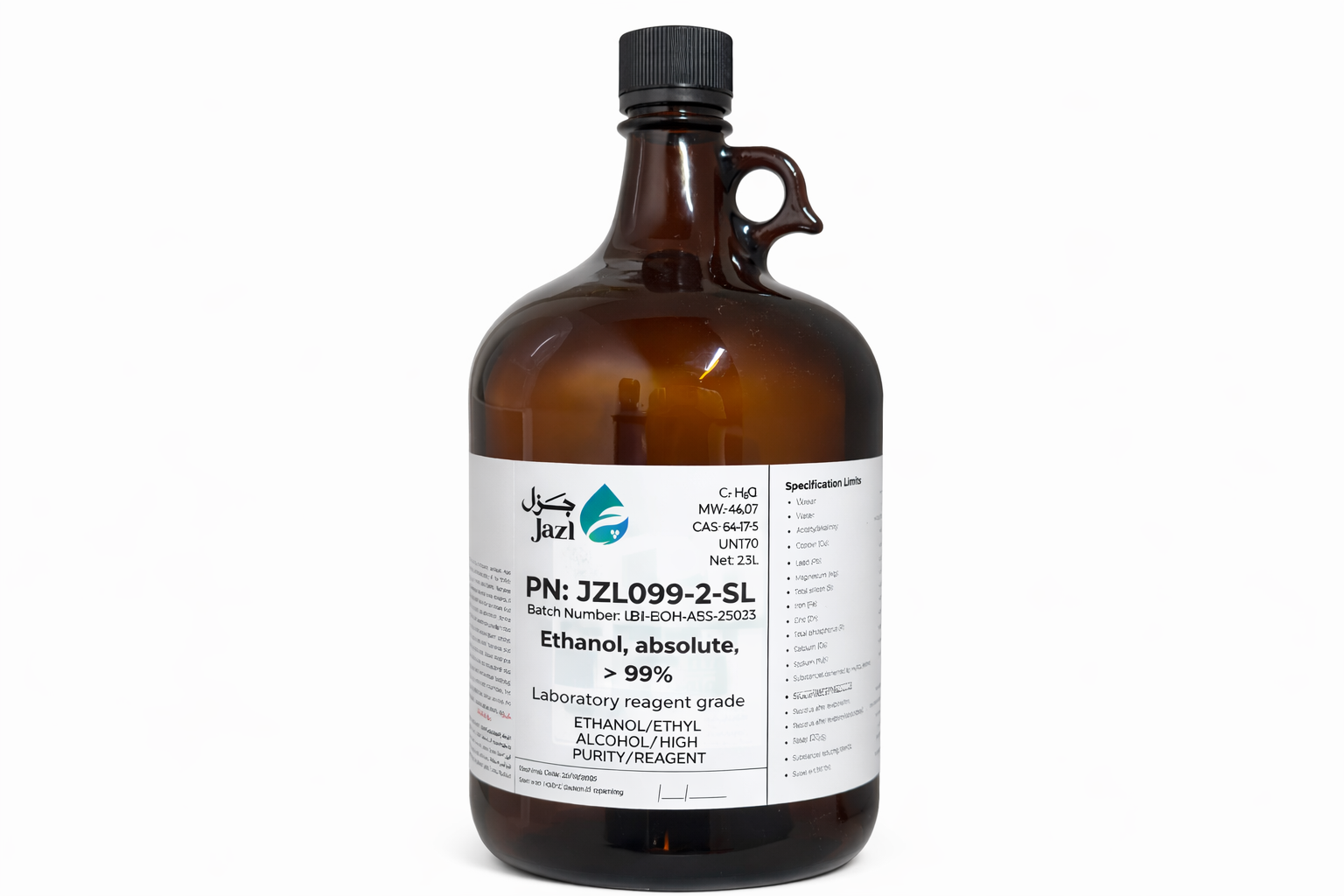
- Smaller volumes, such as 2.5 L packs, helpful for labs, R&D units, and controlled dispensing environments.
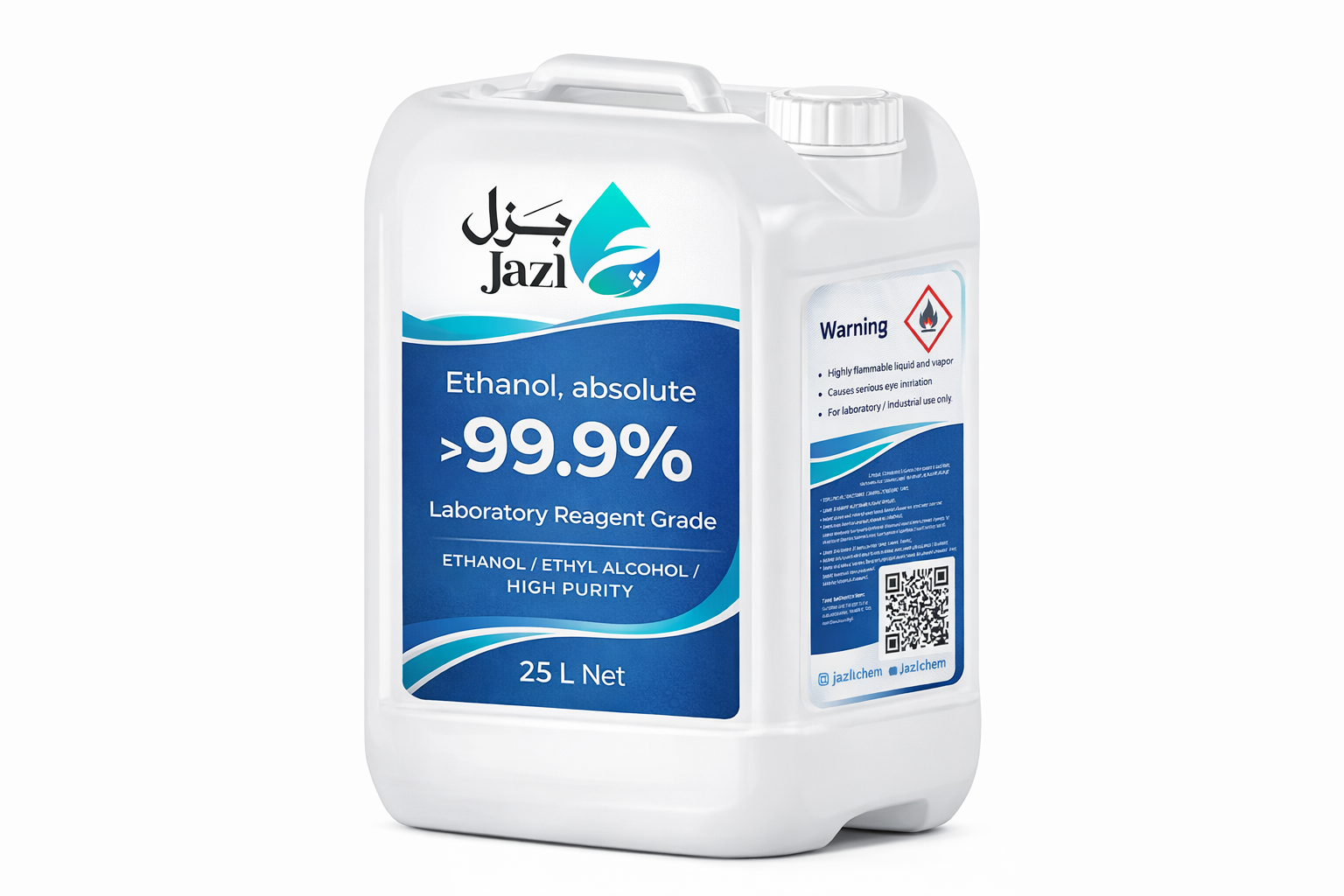
- Intermediate volumes like 25 L containers used by hospital pharmacies, compounding units, and mid size manufacturers.
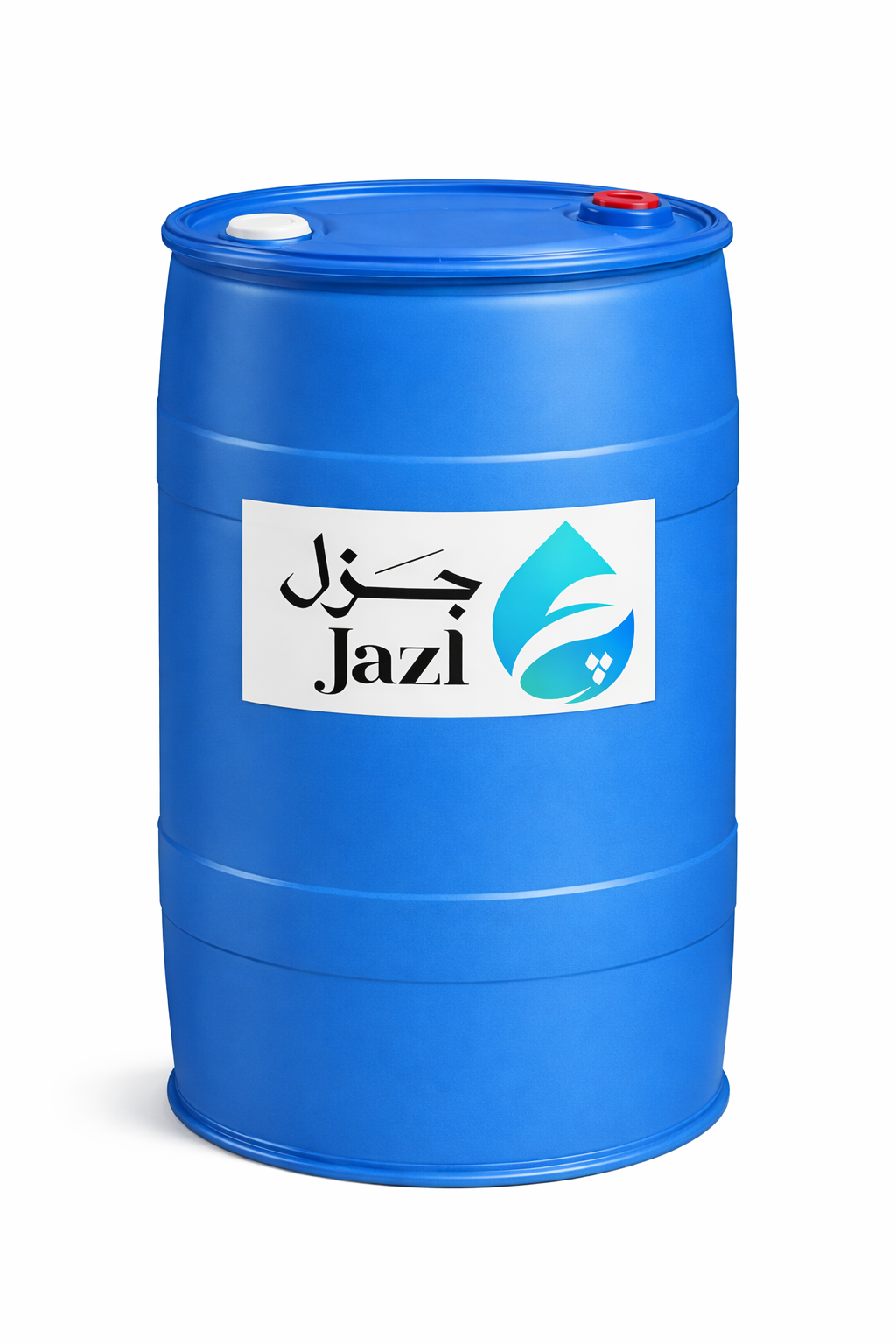
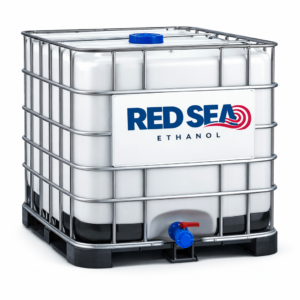
- Bulk options including 220 L barrels, IBC tanks, and ISO tanks for large industrial and pharma sites.
Example: 25 L Medical-Grade Ethanol 99.9%
Our 25 L medical grade ethanol 99.9% is designed for laboratory and healthcare use with rapid evaporation and low residue.
The product focuses on consistent purity for applications such as ethanol for medical disinfection, ethanol for hospital sanitization, and lab preparations.

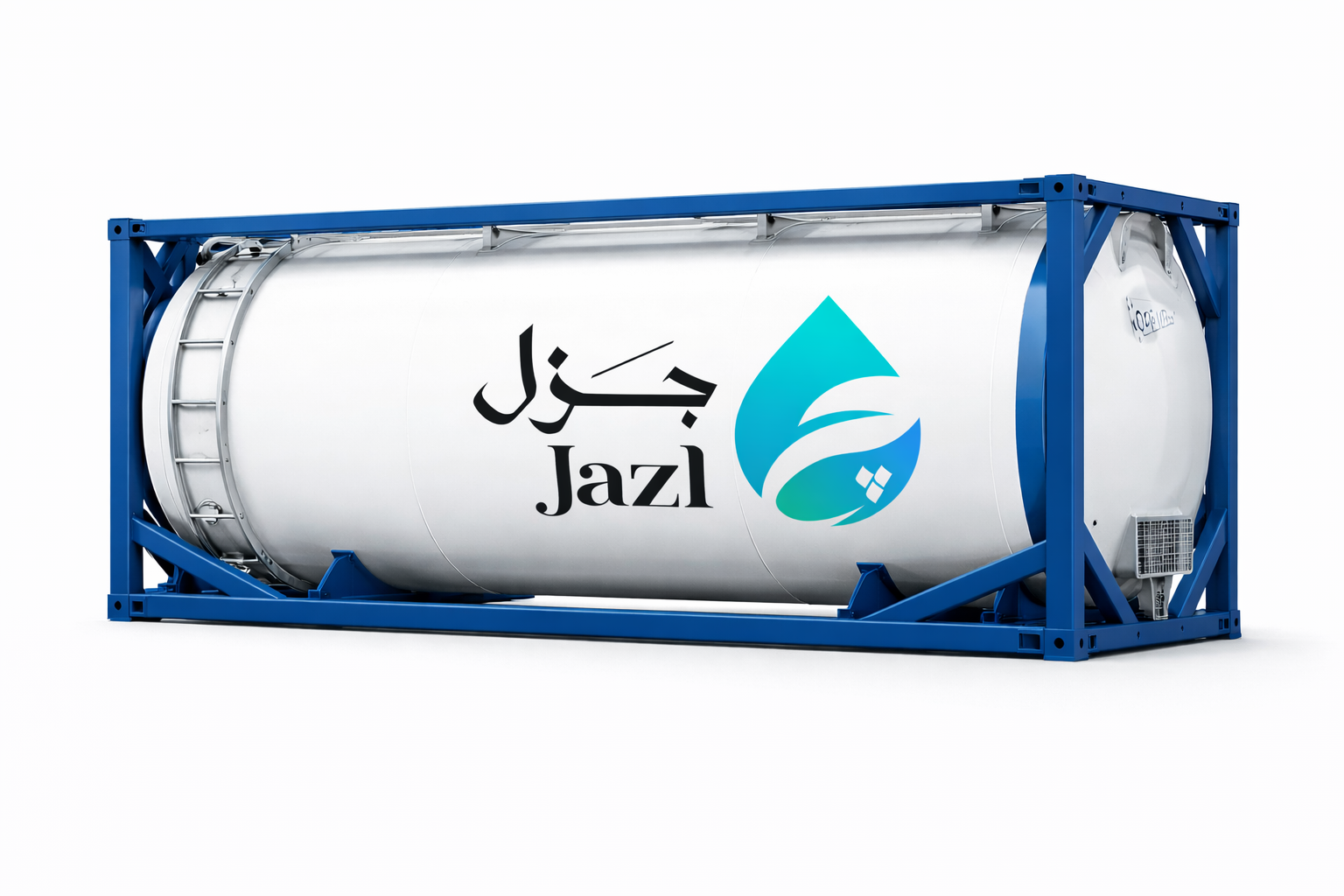
7. Red Sea Industrial and Perfumery Ethanol: Quality for Fragrances and Cosmetic Applications
For perfumery, cosmetic factories, and other industrial users in GCC, our Red Sea line provides anhydrous ethanol 99.9% with a focus on odor neutrality and consistent solvency.
While regulatory frameworks differ from pharmaceuticals, many brands still prefer Ph.Eur-style discipline in impurity control to support premium positioning and internal quality policies.
Use Cases in Fragrance and Cosmetics
Red Sea ethanol is widely used as:
- Ethanol for perfume manufacturing and perfumers alcohol for fine fragrance, body sprays, and deodorants.
- Ethanol for fragrance industry as a carrier that dissolves fragrance oils while providing quick dry down and minimal residue.
- Cosmetic grade ethanol for toners, hair products, and other topical formulations where clarity and stability matter.
Bulk Formats for Industrial Users
To support regional distribution in Saudi Arabia and the wider GCC, we supply Red Sea ethanol in 205 L barrels, 220 L barrels, IBC tanks, and ISO tanks.
This enables centralized procurement for groups that operate multiple factories and distribution hubs across the region.
8. Ethanol for Laboratory Use and Chromatography: Ph.Eur and Analytical Integrity
Labs in GCC, especially those working with HPLC, GC, or sensitive spectroscopic methods, rely on solvents that do not introduce additional chromatographic peaks or baseline drift.
Ph.Eur-like control of impurities, particularly fusel oils, aldehydes, and residual solvents, is critical for consistent analytical performance.
Ethanol for Chromatography and Sample Prep
Our ethanol for chromatography and general ethanol for laboratory use can be supplied with detailed impurity profiles and batch documentation to support method validation.
When combined with Ph.Eur reference criteria, this helps your QC team maintain robust system suitability over time.
Denatured Ethanol and Lab Applications
In some cases, labs and industrial sites prefer denatured ethanol for specific technical or regulatory reasons.
We work with customers to define which denaturants are acceptable in their use case, and how this interacts with any reference to pharmacopoeial or local regulatory requirements.
9. Procurement Checklist: Buying Ph.Eur-Oriented Ethanol in GCC
To avoid mislabeling and substandard supplies, procurement teams should standardize how they assess ethanol offers across local and imported sources.
Below is a concise checklist we encourage our GCC partners to use when evaluating any ethanol supplier Middle East or ethanol production plant.
Technical and Documentation Checklist
- Specify target grade: pharmaceutical, medical, laboratory, cosmetic, or industrial.
- Confirm purity level, for example absolute ethanol 99.9%, and water content range.
- Request detailed COA including organic impurity limits and analytical methods.
- Ask how the supplier ensures alignment with Ph.Eur or other pharmacopoeias where applicable.
- Define intended use (e.g. ethanol for hand sanitizer, ethanol for perfume manufacturing, ethanol for chromatography) so the supplier can advise.
- Clarify packaging needs: 25 L, 205/220 L drums, IBC tanks, or ISO tanks.
- Assess logistics capability for Saudi and cross border GCC deliveries.
What We Need From You for a Quote
When you Request a Quote, sharing the following details helps us respond accurately:
- Required grade and intended application.
- Estimated annual volume and first order size.
- Preferred packaging and delivery frequency.
- Delivery location within Saudi or other GCC state.
- Any explicit pharmacopoeial, GSO, or internal QA requirements.
10. Local Manufacturing vs Import: Strategic Advantages for GCC Buyers
Choosing a regional ethanol manufacturer Saudi Arabia instead of only relying on imports can significantly improve lead times, supply security, and responsiveness during audits.
As a production plant rather than a trader, we control distillation, refining, and quality control on site, which is valuable when your QA team needs direct technical conversation.
Benefits of Local High Purity Ethanol Production
- More predictable supply for critical uses such as ethanol for hospital sanitization and pharma manufacturing.
- Faster response when impurity profiling or method validation discussions are needed for Ph.Eur-aligned projects.
- Reduced logistics risk and customs complexity for GCC distribution.
Supporting Future Regulatory Developments
Pharmacopoeial and GSO standards will continue to evolve, affecting solvents along with APIs and excipients.
Working with a local plant that continuously refines purification and impurity control methods helps ensure your solvent specification stays aligned with emerging requirements across GCC markets.
Conclusion
Ph.Eur certification and pharmacopoeial alignment are no longer abstract regulatory topics for GCC companies that use ethanol.
They directly influence how regulators, auditors, and your own QA teams assess the suitability of high purity ethanol for pharmaceutical, medical, laboratory, cosmetic, and industrial applications.
By sourcing from a regional pharmaceutical ethanol supplier GCC with an integrated production plant and a strong focus on impurity control, you can reduce compliance risk, simplify documentation, and support smoother market access across Saudi Arabia and the wider Gulf.
If you are planning a new product, qualifying a second source, or addressing mislabeling concerns, talk to our team about your required purity, specification, and packaging so we can help you build a robust, Ph.Eur-aware ethanol strategy for the GCC.
