
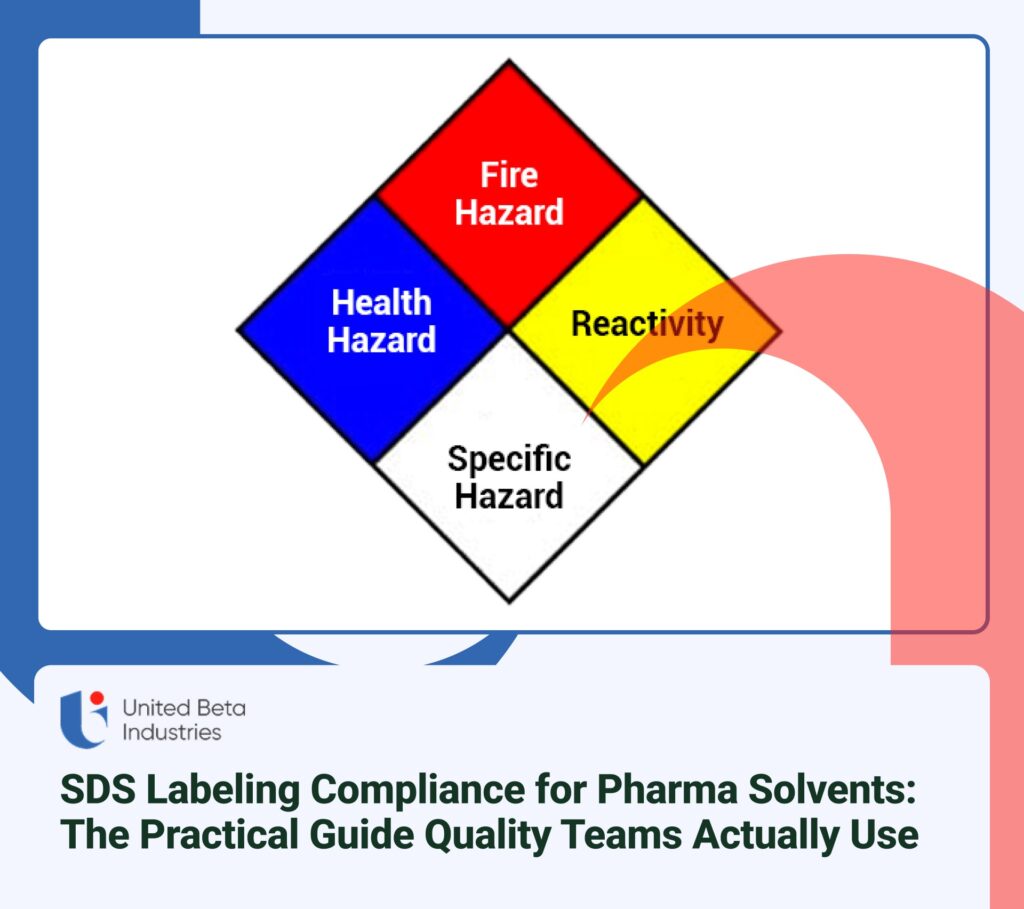
Across recent European inspections, regulators found that 35% of Safety Data Sheets (SDS) were non‑compliant, which directly affects how pharma solvents are labeled, stored, and used in critical environments.
Key Takeaways
| Question | Answer |
|---|---|
| What is SDS labeling compliance for pharma solvents? | It is the alignment of solvent labels and SDS content with GHS / regulatory requirements, so information on hazards, composition, handling, and transport is accurate and consistent for products like medical grade ethanol and pharmaceutical grade ethanol. |
| Why does SDS labeling matter for ethanol grades? | Misaligned or incomplete labels on high purity ethanol, laboratory grade ethanol, or cosmetic grade ethanol can lead to incorrect use, incompatible storage, or non‑compliance in audits. |
| How do we verify a solvent supplier is compliant? | Request full SDS, certificates, and packaging details, and confirm that labeling and SDS match for each packaging configuration on the supplier’s pharma-grade ethanol product list. |
| What is the biggest SDS risk for pharma ethanol buyers? | Inconsistencies between labels and SDS, especially for denatured ethanol or industrial ethanol used in multiple lines like ethanol for hand sanitizer and ethanol for perfume manufacturing. |
| Which grades require the strictest SDS controls? | Medical grade ethanol, pharmaceutical grade ethanol, ethanol for chromatography, and ethanol for laboratory use require very tight impurity, hazard, and use‑domain descriptions. |
| How can I get support with solvent SDS labeling? | You can directly contact our technical team to review your required purity, labeling expectations, and documentation package. |
1. Why SDS Labeling Compliance Is Critical For Pharma Solvents
For pharma manufacturers and hospitals, SDS labeling for solvents is not an administrative detail, it is a core part of quality and safety control.
When labels and SDS for products like medical grade ethanol, pharmaceutical grade ethanol, or absolute ethanol 99.9% are inconsistent, every downstream document and process that references them is at risk.
We see three main impact areas for non‑compliant SDS labeling on pharma solvents:
- Regulatory exposure during GxP and Ph.Eur aligned audits.
- Operational risks in compounding, sterilization, and analytical labs.
- Supply chain confusion when multiple grades, like laboratory grade ethanol and cosmetic grade ethanol, share similar packaging.
As an ethanol manufacturer operating a dedicated ethanol production plant, we design our documentation so that auditors, QA teams, and EHS professionals can trace every hazard and control from the label back to the SDS.
2. Core SDS And Label Elements For Ethanol-Based Pharma Solvents
SDS content and on‑container labels must work together for every ethanol grade, whether it is high purity ethanol for chromatography or industrial ethanol for general disinfection.
For pharma solvents, we recommend that QA teams verify at least the following alignment points between label and SDS:
- Product identifier: clear naming that distinguishes medical grade ethanol from cosmetic grade ethanol or perfumers alcohol.
- Concentration / purity: for example, explicit 99.9 percent for absolute ethanol 99.9% or denatured ethanol with exact denaturant ratios.
- Hazard pictograms and statements: flammability and health hazard statements that match SDS Section 2.
- Supplier identification: same ethanol manufacturer name, address, and emergency contact across all documents.
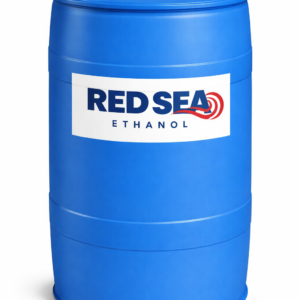
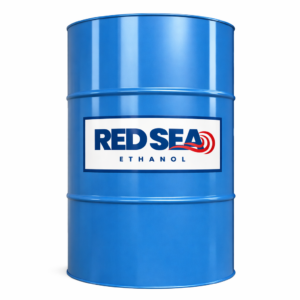
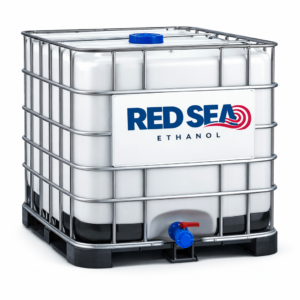
For products that move in bulk, such as ISO tanks or IBCs, the label often appears on placards and shipping documents, so accuracy at this level is just as important as it is for small containers.
3. Mapping SDS Requirements To Specific Ethanol Grades And Use Cases
Different applications of ethanol require different emphasis in SDS and labeling, even when purity is similar.
A pharma manufacturer using ethanol for chromatography has different focus points than a hospital using ethanol for hospital sanitization or a perfumery using ethanol for perfume manufacturing.
| Use Case | Typical Grade | SDS / Label Focus |
|---|---|---|
| Ethanol for medical disinfection & hospital sanitization | Medical grade ethanol, pharmaceutical grade ethanol | Microbial quality claims, compatibility with devices and surfaces, clear flammability controls. |
| Ethanol for antiseptic production and hand sanitizer | High purity ethanol, denatured ethanol | Denaturant specifications, viscosity modifiers, vapor exposure guidance. |
| Ethanol for fragrance industry and perfumers alcohol | Cosmetic grade ethanol, perfumers alcohol, industrial ethanol | Odor profile, denaturant type, storage stability, interaction with essential oils. |
| Ethanol for laboratory use & chromatography | Laboratory grade ethanol, high purity ethanol | Impurity limits, UV cutoffs, compatibility with analytical methods. |
We classify and label each solvent so that these contextual differences are reflected in both the SDS and the visible packaging description.
A concise 3-step workflow for SDS labeling compliance in pharma solvents. This infographic guides regulatory readiness and implementation.
4. Practical SDS Labeling Checklist For Ethanol Buyers And QA Teams
When you qualify an ethanol supplier or a pharmaceutical ethanol supplier GCC, you should validate SDS alignment before approving any batch for GMP or hospital use.
Our suggested checklist focuses on the gap that regulators see most often: incorrect, incomplete, or mismatched hazard communication for solvents.
- Confirm product name and purity on label equal those in SDS, including 99.9 percent for absolute ethanol 99.9% where applicable.
- Check that hazard pictograms and signal words match SDS Section 2.2 for flammable liquids.
- Verify denaturant description for any denatured ethanol, so downstream formulators know exactly what they are handling.
- Ensure the supplier identification matches the ethanol production plant you have audited or approved.
- Review storage and handling instructions for compatibility with your warehouse, lab, or hospital environment.
We structure our SDS to support this kind of line‑by‑line verification, which helps procurement and QA teams sign off more quickly.
5. How Globally Harmonized System (GHS) Rules Shape Ethanol SDS Labeling
Ethanol is classified as a flammable liquid, and GHS defines how this translates into standardized phrases, pictograms, and label layout.
For pharma solvents, we see three key GHS impacts that QA teams should always verify.
- Hazard classification for flammability category, typically based on flash point, must be correct in SDS and mirrored on the label.
- Standardized H‑statements and P‑statements must appear without modification, especially for ethanol used in enclosed spaces such as labs or clean rooms.
- Pictograms for flammability and any secondary hazard must be visible and legible on all packaging sizes, from IBC to small lab containers.
When we prepare SDS for pharmaceutical grade ethanol and laboratory grade ethanol, we build from GHS requirements first, then add use‑specific guidance that matters for pharma and hospital environments.
6. Common SDS Labeling Gaps Seen With Pharma Ethanol Solvents
Across the industry, we see recurring issues in how ethanol solvents are labeled and documented, especially where trading companies re‑label product without full quality data.
These are the defects we encourage buyers to look for when qualifying an ethanol supplier Middle East or any bulk ethanol supplier.
- Unclear grade definition, where the label simply states “ethanol solvent” without specifying medical grade ethanol, laboratory grade ethanol, or industrial ethanol.
- Missing denaturant details for denatured ethanol, which creates uncertainty for formulators making antiseptics or fragrance concentrates.
- Inadequate impurity profiling, particularly for ethanol for chromatography and pharmaceutical grade ethanol, where trace contaminants affect analysis or API processing.
- Inconsistent supplier naming, which complicates traceability in audits and change control.
As an ethanol manufacturer Saudi Arabia, we address these by integrating impurity profiling and Ph.Eur alignment directly into our SDS frameworks.
7. Bulk Packaging, Logistics, And SDS Labeling For Ethanol
SDS compliance is not limited to single containers, it also covers how we label, placard, and document ethanol across bulk logistics systems like IBC totes and ISO tanks.
For a bulk ethanol supplier that serves pharma, hospital, and industrial clients, this is where mislabeling can quickly multiply across entire regions.
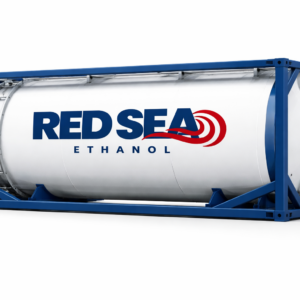
Red Sea Ethanol For Perfumery And Industrial Applications
Our Red Sea Ethanol 99.9% line is designed as high purity ethanol for perfumery, industrial ethanol use, and as a base for ethanol for perfume manufacturing and ethanol for fragrance industry applications.
We maintain aligned SDS and label content across every packaging format so buyers can switch capacities without re‑qualifying safety information.
8. Medical Grade Ethanol And Hospital-Facing SDS Expectations
Hospitals and healthcare systems that use ethanol for medical disinfection, ethanol for hospital sanitization, and as a component for ethanol for hand sanitizer expect a particular depth of information in solvent SDS.
They must document compatibility with materials, room types, and device classes, and they rely on clear solvent hazard and handling data to do this correctly.
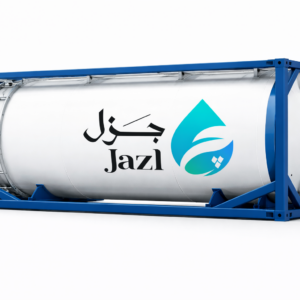
Medical-Grade Ethanol For Laboratory And Medical Use
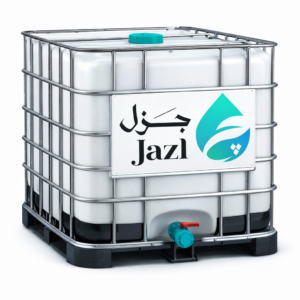
Our 99.9 percent medical grade ethanol products are packaged in ISO tanks and IBCs for large institutions and manufacturers.
We prepare SDS to support use in laboratories, pharmacy prep areas, and industrial-scale manufacturing that supplies hospital systems.
9. Industrial Ethanol, Perfumery, And Cosmetic Grade Labeling Nuances
While pharma and hospital buyers focus on Ph.Eur alignment, industrial ethanol and cosmetic grade ethanol users focus on aspects like odor neutrality, residue, and compatibility with fragrances or cosmetic actives.
For these segments, SDS must still fully comply with GHS but should also provide clarity on cosmetic or fragrance use limitations where relevant.
Perfumers, for instance, often specify perfumers alcohol with narrow impurity and odor targets, and they require transparent descriptions of denaturants and stabilizers.
We treat these applications with the same documentation rigor as our pharma lines, so that fragrance manufacturers can reference a clear, consistent solvent profile in their own dossiers.
10. Verifying Supplier Credibility: From Ph.Eur Alignment To Audit Readiness
Given the rate of non‑compliant SDS in the market, buyers are increasingly careful to work with an ethanol manufacturer rather than a trader, especially for pharma grade use.
We support this by offering technical documentation, impurity profiling, and transparent manufacturing origin for every batch of ethanol solvent.
Many QA teams assess suppliers using criteria such as:
- Local manufacturing footprint, for example a fully Saudi owned ethanol production plant serving GCC.
- Documented alignment with pharmacopoeia standards for pharmaceutical grade ethanol.
- Availability of audit support materials, including SDS, CoA templates, and impurity data.
- Consistent packaging descriptions across ISO tanks, IBCs, and drums.
We encourage buyers to involve both procurement and quality early when specifying ethanol for chromatography, ethanol for laboratory use, or bioethanol industrial use, so that SDS and labeling requirements are clear before RFQ.
11. What We Need From You For A Precise Quote And Documentation Package
When you request bulk ethanol from us, we prepare a documentation set that matches your regulatory and operational expectations.
To do that efficiently, we ask for a concise technical brief at RFQ stage.
- Intended use, for example ethanol for antiseptic production, ethanol for hospital sanitization, or ethanol for fragrance industry.
- Required grade and purity, such as medical grade ethanol 99.9%, laboratory grade ethanol, or industrial ethanol for general cleaning.
- Packaging format and volume, including whether you need drums, IBCs, or ISO tanks as a bulk ethanol supplier partner.
- Certifications and pharmacopoeia references you must see in SDS and CoA, especially for pharmaceutical grade ethanol.
- Delivery location, particularly if you are sourcing via an ethanol supplier Middle East or across GCC and Africa.
This information allows us to recommend the most suitable product and to confirm that SDS and labeling content fully support your intended use.
Conclusion
SDS labeling compliance for pharma solvents is not optional, it is central to safe, auditable use of ethanol across pharma manufacturing, laboratories, hospitals, and perfumery and cosmetic industries.
By selecting a technically focused ethanol manufacturer that prioritizes high purity ethanol, clear grade definition, and rigorous SDS alignment, you reduce regulatory risk and give your teams reliable data for every batch they handle.
If you are specifying medical grade ethanol, pharmaceutical grade ethanol, or industrial ethanol for any critical process, we recommend engaging our technical team early.
You can share your required purity, packaging, and documentation needs so we can prepare a tailored SDS and labeling package that supports your quality system from day one.
