

In modern ethanol quality control, analytical speed is becoming critical, and recent studies show that techniques like SIFT-MS can analyze up to 17 times more residual-solvent samples per day than conventional GC-FID, which is reshaping how leading plants manage pharma-grade ethanol impurity profiling.
Key Takeaways
| Question | Key Insight |
|---|---|
| What is impurity profiling in pharma ethanol? | It is the systematic detection, identification, and quantification of volatile, semi-volatile, and elemental impurities in high-purity ethanol used in laboratories, hospitals, and pharmaceutical manufacturing. |
| Which techniques are most used today? | Static headspace GC, GC-FID, GC-MS, LC-MS, and newer tools such as SIFT-MS and portable GC-PID, supported by elemental impurity methods aligned with ICH Q3D(R2). |
| Why does ethanol grade and packaging matter? | Pharma grade and lab grade ethanol, such as our Ethanol 99.9% medical-grade ISO tank, require tighter impurity limits and robust packaging to avoid contamination during storage and transport. |
| How do regulators influence impurity profiling? | Guidelines like ICH Q3C for residual solvents and ICH Q3D(R2) for elemental impurities set limits that laboratories and manufacturers must meet when qualifying ethanol for pharmaceutical use. |
| What role does the ethanol manufacturer play? | A dedicated production plant, such as United Beta Industries, must integrate validated impurity profiling methods directly into its distillation and refining quality systems. |
| How can buyers reduce mislabeling risk? | Procurement teams should request full impurity profiles, batch certificates, and the exact grade and packaging, for example by starting from our products overview and matching their specifications. |
| Where to start if we need bulk pharma ethanol? | Define target purity level, impurity limits, required documentation, volume, and delivery location, then contact us so we can prepare a detailed technical quote. |
Understanding Impurity Profiling Requirements For Pharma Ethanol
For pharma ethanol, impurity profiling is not optional, it is the basis for qualifying ethanol as suitable for laboratory, medical, and pharmaceutical manufacturing environments. We design our quality systems around identifying residual solvents, organic by-products, moisture, and elemental impurities at trace levels.
Regulatory frameworks such as ICH Q3C for residual solvents and ICH Q3D(R2) for elemental impurities define risk-based limits that our production plant must respect. This affects how we distill, store, package, and release every batch, from small lab containers to bulk ISO tanks.
- Volatile organic impurities from fermentation or denaturants
- Processing residues from distillation and refining
- Elemental impurities from equipment and packaging contact
- Moisture and related higher alcohols (e.g., propanols, butanols)
Each of these impurity families requires a specific analytical approach, and often a combination of methods is used to build a complete impurity profile for a pharma- or lab-grade ethanol batch.
In our experience, the tighter the target limit, the more crucial robust sampling, validated methods, and appropriate packaging become, especially for high-purity materials shipped across Saudi Arabia, the GCC, and wider MENA.


Static Headspace GC: The Workhorse For Residual Solvents In Ethanol
Static headspace gas chromatography is currently the core technique for residual solvent profiling in ethanol used in pharmaceutical contexts. It separates volatile impurities from the liquid matrix before injection, which significantly reduces solvent load on the instrument and improves reproducibility.
Recent work has shown that a well-developed headspace GC method can quantify up to 27 residual solvents in pharmaceutical matrices with minimal diluent consumption, while achieving recoveries of at least 93 percent and robust validation across multiple matrices. This directly supports ethanol-containing formulations that must comply with ICH Q3C limits.
- Advantages: broad analyte coverage, regulatory familiarity, good quantitation
- Limitations: moderate throughput and method development time
- Best use: batch release testing and method-transfer to contract labs
For pharma-grade or lab-grade ethanol, we rely on headspace GC to screen for common residual solvents, fermentation by-products, and any intentionally added denaturants that must be tightly controlled or excluded for specific applications.
When buyers ask us for ethanol suitable for sensitive pharmaceutical manufacturing steps, we typically provide headspace GC impurity profiles as part of the documentation package, aligned to international pharmacopoeial expectations.


Advanced GC-FID And GC-MS For Detailed Organic Impurity Fingerprints
While headspace GC defines the routine backbone, GC with flame ionization detection (GC-FID) and GC coupled to mass spectrometry (GC-MS) provide deeper insight into complex impurity patterns in ethanol. GC-FID is excellent for quantifying known volatile and semi-volatile organics, while GC-MS supports structural identification of unexpected peaks.
In comparative studies, GC-FID remains trusted but can be outperformed in throughput by modern alternatives. For us as a manufacturing plant, GC-based techniques remain indispensable for method development, troubleshooting, and confirming the identity of trace impurities that may originate from feedstock variability or process adjustments.
- GC-FID: robust quantitation, especially for hydrocarbons and alcohols
- GC-MS: mass spectral identification of unknown components
- Use cases: root-cause analysis, new batch qualification, impurity trend monitoring
For pharma ethanol customers, GC-FID and GC-MS results help answer practical questions, such as whether a new supply route or packaging choice has introduced any additional volatiles, and how these compare with prior validated batches.
We also use GC-MS qualitatively when we need to document the absence of specific structurally related impurities, which can be important in sensitive pharmaceutical or high-end laboratory applications.

This infographic highlights four essential impurity profiling techniques used to analyze pharmaceutical-grade ethanol.
SIFT-MS: High-Throughput Real-Time Residual Solvent Screening
Selective ion flow tube mass spectrometry (SIFT-MS) represents a newer direction in impurity profiling for ethanol used in pharmaceutical workflows. It allows direct gas-phase analysis without chromatographic separation, which significantly boosts throughput while retaining high sensitivity.
In controlled studies, SIFT-MS has demonstrated ppt-level detection limits for residual solvents, enabling compliance with very low permissible daily exposures, even in ethanol-rich matrices. This is particularly important when pharma customers push for tighter impurity specifications to support advanced formulations.
- Real-time analysis with no chromatographic run time
- Multi-component capability for complex residual solvent mixes
- Suitable for at-line or near-line monitoring in production plants
For a high-purity ethanol manufacturer like us, techniques such as SIFT-MS complement traditional GC, especially for rapid screening of multiple production lines, raw materials, or packaging environments. They enable quicker decisions on batch segregation or reprocessing.
Although not yet as widely standardized as headspace GC in pharmacopoeias, SIFT-MS is increasingly used in method development and internal quality monitoring for ethanol streams destined for sensitive pharmaceutical uses.

Portable GC-PID For On-Site Ethanol Impurity Checks
Portable gas chromatography with photoionization detection (GC-PID) is gaining attention as a field-capable tool for residual solvent analysis in pharmaceutical environments. For ethanol producers and users, it opens the possibility of rapid on-site checks of storage tanks, transfer lines, and filling areas.
Recent research has demonstrated detection limits in the range of 26.0 to 52.0 pg/mL, a total run time of approximately 5 minutes, and recovery greater than 91.2 percent for typical residual solvents using portable GC-PID setups. This combination of speed and sensitivity supports practical in-plant surveillance of impurity levels.
- Use cases for us and our clients:
- Screening incoming bulk ethanol before unloading
- Verifying cleanliness of tankers or IBCs before filling
- Spot-checking batches during storage in remote locations
Compared to laboratory-bound techniques, portable GC-PID cannot replace full impurity profiling, but it is a powerful layer of risk control for high-value pharma ethanol supply chains. We see it as a complement to our central QC lab, especially for large bulk movements.
For procurement teams, knowing that both laboratory and field-capable tools are considered in the supplier’s QA/QC program is one sign that ethanol impurity risks are managed proactively.


Elemental Impurity Analysis In Line With ICH Q3D(R2)
Organic residual solvents and by-products are not the only concern for pharma ethanol. Elemental impurities, including trace metals from contact with stainless steel, valves, or packaging components, must also be evaluated within a risk-based framework.
The ICH Q3D(R2) guideline, recently updated with an Appendix that extends to dermal and transcutaneous exposures, now shapes expectations for ethanol used in topical and transdermal pharmaceutical products. Many of these dosage forms rely on ethanol as a solvent or penetration enhancer.
- Common techniques: ICP-MS, ICP-OES, and related spectrometric methods
- Targets: class 1 and 2A metals, plus others depending on process risk assessment
- Drivers: patient exposure limits, product type, and route of administration
As a manufacturing plant, we conduct elemental impurity assessments both on our ethanol and on the contact materials used in our logistics chain, especially large storage tanks and bulk packaging. This helps us align with both ICH Q3D(R2) and related EU and USP expectations.
For buyers, the practical implication is that a pharma ethanol supplier should be able to support your elemental impurity risk assessments with data, or at least with validated methodologies that you can reference in your own documentation.
Packaging, Extractables, And Impurity Migration In Ethanol Supply
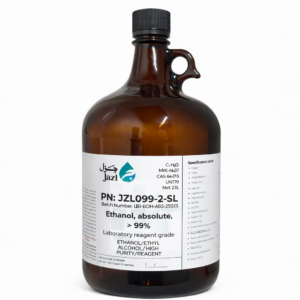
Even if ethanol leaves the distillation column and QC lab fully compliant, packaging can introduce additional impurities over time. Plastics and elastomers may release extractable elements or organic compounds, especially in contact with high-purity solvents like ethanol.
Recent European Pharmacopoeia work, such as chapter 2.4.35 on extractable elements in plastics for pharmaceutical use, highlights the growing regulatory and scientific focus on this issue. For ethanol, this means that the choice between drums, IBCs, and ISO tanks must consider both logistics and impurity migration risks.
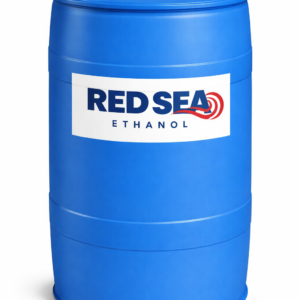
- Metal drums: potential for metallic leachables if internal coatings fail
- Plastic IBCs: risk of organic extractables and elemental impurities from polymer systems
- ISO tanks: require strict inspection and maintenance to avoid contamination
We select packaging for our ethanol grades with these factors in mind and monitor impurity profiles across storage times. For sensitive pharma applications, we encourage clients to discuss maximum storage duration, temperature conditions, and decanting practices with our technical team.
When you request a quote, including your preferred packaging format and expected storage conditions helps us recommend the most suitable impurity control strategy for your supply chain.
Method Validation, Documentation, And Mislabeling Risk Control
From a buyer’s perspective, the analytical technique is only as useful as the validation and documentation behind it. For pharma ethanol, this means that every impurity profiling method must be validated for accuracy, precision, linearity, limits of detection and quantitation, and robustness.
For example, headspace GC methods that cover 27 residual solvents have been validated with high recoveries and robustness to small parameter changes. Studies also show that SIFT-MS can deliver repeatability below 10 percent, with good linearity, which supports its use in high-throughput screening.
- Request method summaries for key impurity tests used on your ethanol
- Confirm that limits are aligned with ICH and pharmacopoeial expectations
- Ask for typical impurity profile ranges based on historical batch data
Mislabeling or incomplete data are real risks in many markets, especially when ethanol is traded multiple times before reaching the final user. By working directly with a manufacturing plant, you reduce this chain length and gain access to primary analytical data.
Our policy is to support clients with transparent impurity documentation for each ethanol grade, which helps their QA teams approve materials faster and more confidently.
Comparing Impurity Profiling Techniques: Selection Guide For QA Teams
Each impurity profiling technique has its own strengths, limitations, and best-fit uses within a pharma ethanol quality program. Selecting the right mix is a technical decision that depends on your risk assessment, regulatory obligations, and operational needs.
Below is a simplified comparison that reflects how we view the main techniques in practice when qualifying our own high-purity ethanol streams.
| Technique | Primary Target | Typical Use | Key Strength | Main Limitation |
|---|---|---|---|---|
| Static headspace GC | Residual solvents | Routine batch release | Regulatory acceptance | Moderate throughput |
| GC-FID | Volatile organics | Quantitative profiling | Robust, sensitive | Limited identity info |
| GC-MS | Unknown organics | Identification, investigation | Structural information | Higher complexity |
| SIFT-MS | Residual solvents | High-throughput screening | Real-time, ppt-level limits | Less standardized |
| Portable GC-PID | Residual solvents | On-site checks | Portability, 5-min runs | Narrower scope than lab GC |
| ICP-MS / ICP-OES | Elemental impurities | ICH Q3D compliance | Trace-level metals | Specialized equipment |
We recommend that pharma and lab customers align their incoming material specifications with a realistic but robust testing package. In many cases, a combination of headspace GC, GC-FID or GC-MS, and elemental analysis is sufficient for supplier qualification and ongoing monitoring.
For projects that demand even tighter controls or rapid on-site screens, SIFT-MS and portable GC-PID can be layered on top as additional assurance tools, especially in large multi-site operations.
What We Need From You To Build The Right Impurity Profiling Package
To support you with the most appropriate impurity profiling and documentation for pharma ethanol, it is important that we understand your technical and regulatory context from the start. This allows our team to match your needs with our internal methods and packaging options.
When you request a quote or start a technical discussion with us, sharing the following information will help us respond efficiently.
- Required ethanol grade and purity (for example, pharma grade, lab grade, 99.9 percent)
- Intended application (pharmaceutical manufacturing step, analytical lab, hospital, cosmetics laboratory, etc.)
- Target impurity limits or guidelines you follow (ICH Q3C, ICH Q3D, USP, Ph. Eur., local authority)
- Preferred packaging (25 L containers, 205 L or 220 L barrels, IBCs, ISO tanks)
- Annual or batch volumes and delivery locations (Saudi, GCC, MENA, or export destinations)
- Documentation requirements (CoA content, impurity chromatograms, method summaries, stability data)
With this information, our technical and commercial teams can define an impurity profiling and supply proposal that is realistic, compliant, and aligned with your internal QA processes.
We view impurity profiling as a shared responsibility between manufacturer and user, and clear communication at the RFQ stage is the best way to avoid delays during qualification and audits.
Conclusion
Top impurity profiling techniques for pharma ethanol now combine proven approaches, such as static headspace GC, GC-FID, GC-MS, and elemental analysis, with newer tools like SIFT-MS and portable GC-PID. Together, they enable high-purity ethanol manufacturers and users to meet increasingly strict regulatory and operational expectations.
As a dedicated ethanol production plant, we integrate these analytical strategies into our refining and packaging operations, so that pharma, lab, and hospital customers receive ethanol with impurity profiles they can trust. If you are planning or reviewing your ethanol supply, we encourage you to define your impurity requirements clearly and reach out to our team to discuss how we can support your specifications and quality standards.
