
Pharma grade ethanol looks simple on a label, but behind that single number sits an entire toolbox of tests that prove methanol is under 200 ppm, benzene is below 2 ppm, and the assay is comfortably above 99.5 percent.
Key Takeaways
| Question | Quick Answer |
|---|---|
| 1. What is the primary purity test for pharma grade ethanol? | Gas chromatography (GC) assay is the core method, typically targeting a minimum of 99.5% v/v ethanol for pharma grade and measuring key volatile impurities. |
| 2. Which impurities matter most for pharmaceutical use? | Methanol, benzene, acetaldehyde, and acetone are critical, with limits such as methanol ≤ 200 ppm and benzene ≤ 2 ppm in high‑purity pharma ethanol. |
| 3. How do labs confirm ethanol identity quickly? | Identity is usually confirmed with FTIR or similar spectroscopic tests, combined with simple physical checks like density and refractive index. |
| 4. Do packaging and volume affect purity testing? | Yes. Bulk formats like IBC tanks and ISO tanks require in‑process and post‑filling sampling to confirm that 99.9% purity is maintained across the entire container. |
| 5. How can buyers verify that “pharma grade” claims are real? | Request a full certificate of analysis, manufacturing origin, and test methods used, then compare to pharmacopeial limits and your internal specs or use a manufacturer’s catalog such as the United Beta Industries product catalogue as a reference point. |
| 6. What should QC teams in the GCC look for specifically? | Continuous access to locally manufactured 99.9% ethanol, clear impurity limits, and documentation aligned with hospital, lab, or pharmaceutical manufacturing requirements across Saudi Arabia and the wider region. |
1. What “Pharma Grade” Ethanol Really Means in Practice
Pharma grade ethanol is not just “very clean alcohol.” It is a solvent that must meet tightly defined impurity limits, identity checks, and assay thresholds so pharmaceutical, diagnostic, and hospital teams can rely on every batch.
In practice, that typically means an assay of at least 99.5 percent v/v ethanol, water below about 0.5 percent, and critical impurities like methanol capped around 200 ppm and benzene around 2 ppm.
- Assay (GC or GC-FID): confirms ethanol content, usually ≥ 99.5% for absolute pharma grade.
- Impurity profile: methanol, benzene, acetaldehyde, acetone, higher alcohols, and other volatiles.
- Physical tests: density, refractive index, appearance, and odor checks.
- Identity tests: typically FTIR or equivalent spectroscopic confirmation.
When we manufacture 99.9 percent medical‑grade ethanol, we design our internal quality control around these requirements because our customers build therapies, diagnostics, disinfectants, and lab workflows on top of that trust.
2. Core Assay Testing: GC And Ethanol Content Above 99.5%
For pharma grade ethanol, assay is the backbone of purity testing. Gas chromatography, typically with flame ionization detection, is the preferred method to quantify ethanol content and separate it from volatile impurities.
Supplier specifications for absolute pharma grade often set a minimum GC assay of 99.5% v/v, and in our plant we engineer our distillation systems to comfortably exceed that, targeting 99.9 percent in the finished product.
Why GC Assay Matters For Pharma Users
Assay drives almost every downstream decision. Formulators need to know how much “real” ethanol is in each liter to calculate solvent ratios, extract efficiencies, and drying profiles.
If your ethanol is labeled 99.9 percent but tests closer to 98, every formulation, titration, or cleaning protocol that relies on that number quietly drifts out of specification.
| Spec | Typical Pharma Grade Target | QC Test |
|---|---|---|
| Ethanol assay | ≥ 99.5% v/v | GC / GC-FID |
| Water content | ≤ 0.5% | Karl Fischer titration |
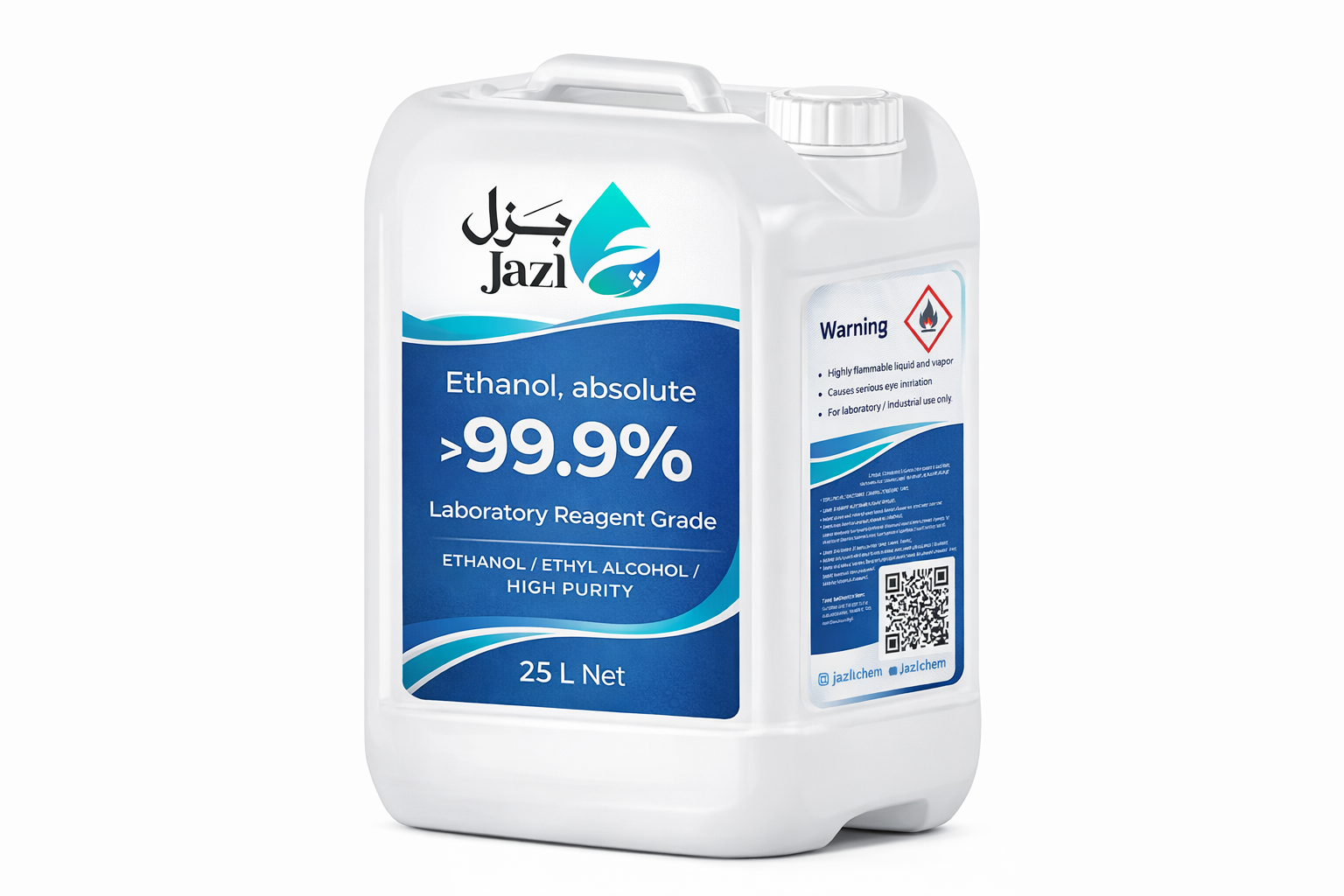
When you compare medical‑grade ethanol in 25 L containers to the same grade in 205 L or 220 L barrels, you should expect identical assay values, not different qualities disguised inside different packaging.
3. Volatile Impurity Testing: Methanol, Benzene, And Beyond
Assay tells you “how much ethanol,” but not whether dangerous contaminants are hiding in the remaining fraction. For pharma applications, the most critical volatile impurities are methanol, benzene, acetaldehyde, and acetone.
Pharmacopoeial guidance, FDA policies, and supplier specs converge on extremely low thresholds, for example methanol ≤ 0.02 percent (200 ppm) and benzene ≤ 0.0002 percent (2 ppm) in high‑grade material.
Priority Volatile Impurities And Typical Limits
Most QC labs treat these as non‑negotiable:
- Methanol: often limited to ≤ 200 ppm in pharma grade ethanol.
- Benzene: typically ≤ 2 ppm, monitored because of its toxicity even at very low levels.
- Acetaldehyde & acetal (1,1‑diethoxyethane): regularly limited around 50 ppm each.
- Acetone & other volatiles: set at compound‑specific ppm ceilings depending on use.
Advanced GC methods separate ethanol from trace benzene and other volatiles at very low ppm levels, which is essential when ethanol is destined for pharmaceutical manufacturing or critical lab workflows.
A concise visual guide to the top 5 purity tests for pharma-grade ethanol. It highlights methods, criteria, and how results impact quality control.
4. Identity Tests: FTIR, Physical Properties, And Visual Checks
Before you worry about parts per million, you should be confident that the solvent in the drum is actually ethanol. Identity testing is the quiet workhorse here.
Most labs use FTIR spectroscopy as a fast confirmatory method, comparing the spectrum of the batch to a reference ethanol spectrum specified in pharmacopeial monographs.
Simple, High‑Value Identity Checks
In our own QA workflows, we pair FTIR identity with physical measurements that any quality lab can repeat:
- Appearance: clear, colorless liquid, free from visible particles.
- Odor: characteristic ethanol odor, no strong solvent off‑notes.
- Density and refractive index: within narrow ranges for near‑absolute ethanol.
These tests are inexpensive, repeatable in hospital and pharmaceutical labs, and provide a robust first line of defense against mislabeled or adulterated ethanol.
5. Water Content And “Anhydrous” Claims
When a drum is labeled 99.9 percent or “anhydrous,” the remaining fraction is mostly water, so Karl Fischer titration is the preferred way to quantify it.
For true pharma grade absolute ethanol, supplier specs often set water at ≤ 0.5 percent, and our distillation and drying systems are built to keep moisture well inside that window across all packaging formats.
Comparing Pharma Grade To Industrial Anhydrous
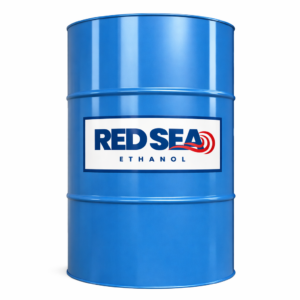
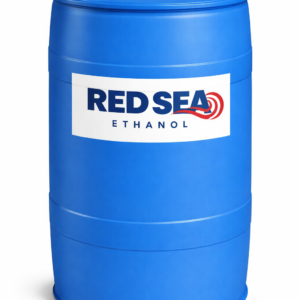
You may see identical 99.9 percent assay values on both pharma grade and industrial anhydrous ethanol such as our Red Sea line. What differs is the regulatory framing, impurity profile, and intended use.
Pharma grade batches undergo tighter control on toxic impurities, aligned with pharmaceutical or hospital requirements, while industrial anhydrous ethanol is optimised for perfumery or general industrial applications.
6. Higher Alcohols And Secondary Volatile Impurities
Beyond methanol and benzene, quality teams routinely monitor higher alcohols such as 1‑propanol, 2‑butanol, isobutanol, and amyl alcohols, especially in ethanol produced from fermentation routes.
Regulatory and analytical studies group these as “Level 2” impurities, with limits in the hundreds to tens of thousands of ppm, depending on the compound and the final application of the ethanol.
Why These Secondary Impurities Still Matter
Even when individual limits are high, a crowded impurity profile can influence odor, solvency behavior, and compatibility with sensitive formulations.
For pharma grade ethanol, our production plant works to minimize these higher alcohols via distillation design and in‑process monitoring, so that the final product behaves predictably across lab, diagnostic, and manufacturing workflows.
7. Visual, Sensory, And On‑Site Quick Checks For Hospitals And Labs
Not every facility has a GC on site, but every facility can perform basic checks that catch obvious problems. We encourage our partners to run visual and sensory screening on each batch they receive.
That can be as simple as pouring a sample into a clear glass vessel and confirming there is no haze, sediment, or unexpected coloration, and ensuring the odor matches the expected ethanol profile.
Bridging Plant‑Level QC With User‑Level Checks
At the manufacturing plant, we already perform more sophisticated analyses, but we view customer‑side checks as a second safeguard in the supply chain.
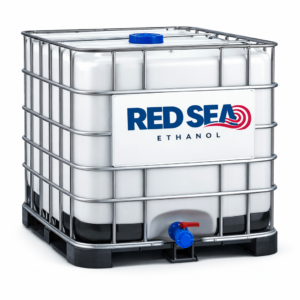
When your internal teams document these quick tests alongside our certificates of analysis, you build a traceable chain of confidence around each 25 L can, 205 L barrel, or IBC tank that enters your facility.
8. Purity Testing Across Packaging: 25 L, 205 L, 220 L, IBC, And ISO Tanks
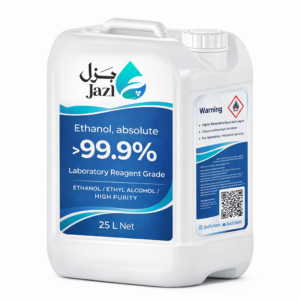
Purity is not only a function of distillation, it is also a function of packaging, logistics, and storage. The same 99.9 percent medical‑grade ethanol that leaves our distillation columns goes into 25 L containers, 205 L or 220 L barrels, and bulk IBC and ISO tanks.
For each packaging type, we adapt our sampling and testing strategy so that the certificate of analysis reflects the actual conditions in the final container, not just an upstream sample.
How We Align Packaging With Consistent Purity
- 25 L and smaller: frequent batch sampling, ideal for labs and hospitals that want manageable volumes.
- 205 L / 220 L barrels: sampling at filling and, if required, at the point of use for long‑distance shipments.
- IBC / ISO tanks: composite sampling strategies to represent the entire volume.
When you procure ethanol for pharmaceutical or lab use, it is reasonable to ask your supplier how purity testing is carried out across each packaging size you plan to buy.
9. Spotting Mislabeling And Ethanol Scams Using Purity Tests
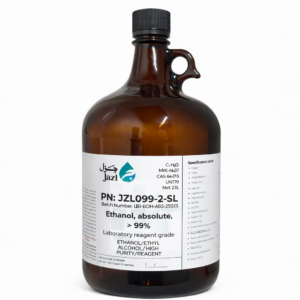
In many markets, ethanol is mislabeled as “pharma grade” when it has never seen a GC or FTIR instrument. That is exactly why testing literacy matters for procurement and QA teams.
You do not need a full analytical lab to ask smart questions and read a certificate of analysis critically.
Practical Red Flags Buyers Should Watch For
- No mention of test methods, just a generic “99.9%” claim without GC, FTIR, or water method.
- Missing or implausible impurity data, especially for methanol and benzene.
- Certificates copied across different batch numbers or packaging types with identical values and no sampling notes.
When customers in Saudi Arabia or across MENA ask our team for support, we are always prepared to explain our test protocols, show typical impurity profiles for our medical‑grade lines, and discuss how that aligns with their internal specifications.
10. Building A Testing‑Aware RFQ: What We Need From You
When you are ready to request a quote for pharma grade or lab grade ethanol, a testing‑aware RFQ helps us respond faster and more precisely.
From our side as a manufacturing plant, we already commit to high‑purity 99.9 percent ethanol and rigorous QC, but we want to match that to your exact protocols, regulatory environment, and packaging needs.
Information That Makes Your RFQ Stronger
- Required grade and purity: for example, 99.9% medical‑grade for lab or pharmaceutical use.
- Target impurity limits: particularly methanol, benzene, and water content, if you have internal limits.
- Planned use: lab diagnostics, pharmaceutical processing, hospital disinfection, or other technical applications.
- Volume and packaging: 25 L cans, 205 L or 220 L barrels, IBC, or ISO tank requirements.
- Delivery location: city and country so we can plan logistics within Saudi Arabia, GCC, MENA, or Africa.
- Documentation: certifications, COA format, and any pharmacopoeial references your QA team expects.
If you share these details with our team, we can quickly advise on the best product line and packaging, and confirm that our purity testing regime aligns with your quality system.
Conclusion
Purity tests for pharma grade ethanol are not optional extras, they are the reason a “99.9%” label means the same thing in a hospital pharmacy, a pharmaceutical plant, and a research lab. GC assay, volatile impurity profiling, FTIR identity, and water content measurement together create a clear picture of quality that procurement and QA teams can rely on.
As a local ethanol manufacturer focused on high‑purity medical and industrial grades, we build these tests into every batch, across every packaging size, so you do not have to guess what is inside your drums, IBCs, or ISO tanks. If you are planning your next ethanol tender or long‑term supply agreement, talk to our team about your required purity and specification, and we will help you match the right product and test regimen to your application.
