
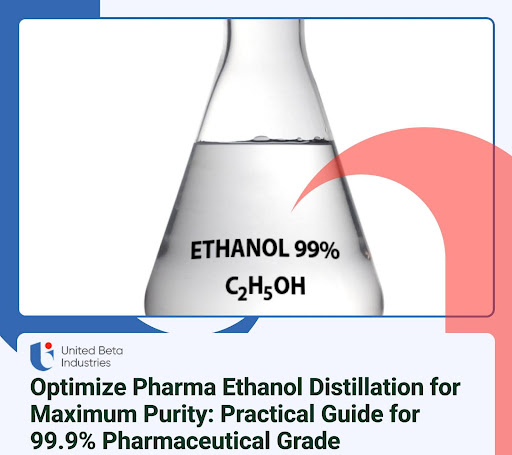
Pharma producers routinely target ethanol purities above 99.9%, and studies show that even traditional multi-stage distillation can reach head and heart fractions with more than 90% ethanol when the process is tuned correctly, highlighting how much performance depends on distillation strategy rather than feedstock alone.
Key Takeaways
| Question | Concise Answer |
|---|---|
| What defines “maximum purity” in pharma ethanol distillation? | For pharmaceutical workflows, maximum purity typically means 99.9% anhydrous ethanol, Ph.Eur. or equivalent compliant, with tightly controlled residual solvents and trace metals, as supplied in our medical-grade 99.9% ethanol. |
| How do we optimize distillation for this purity level? | We combine optimized column design, structured packing, precise fraction cuts, and controlled reflux to concentrate heart fractions while minimizing heads and tails, then validate purity by HPLC and GC analysis per pharmacopeial standards. |
| Which packaging formats best preserve high purity? | Closed systems such as 25 L cans, 205–220 L barrels, IBC tanks, and ISO tanks help maintain anhydrous conditions and contamination control, as used in our ISO tank pharma ethanol. |
| How can buyers distinguish genuine pharma-grade ethanol from mislabeled product? | Always request certificates of analysis, origin from a production plant (not only a trader), and specification sheets that reference Ph.Eur. or similar frameworks, then compare with trusted sources such as our pharma and industrial ethanol range. |
| What residual solvent limits matter in purification? | Under USP <467> and ICH Q3C, residual solvents like methanol have ppm-level limits, so distillation must be paired with analytical control to keep these impurities far below allowed thresholds in the final ethanol stream. |
| How can we procure high-purity ethanol in bulk efficiently? | Specify required purity, applicable pharmacopeia, volume, and packaging (barrel, IBC, ISO tank), then submit a detailed RFQ to the manufacturer. You can start this process via our contact and quote request page. |
Understanding Pharma-Grade Ethanol Purity Requirements
To optimize pharma ethanol distillation, we first need a clear definition of what “maximum purity” means in a regulated environment. For most pharmaceutical and laboratory applications, this refers to 99.9% anhydrous ethanol aligned with European Pharmacopoeia (Ph.Eur.) or equivalent reference standards.
Purity is not only the ethanol percentage, it also includes tight controls on water, residual solvents, heavy metals, and organic impurities. These thresholds are set so that ethanol can function as a reliable solvent for APIs, intermediates, disinfectants, and analytical procedures without introducing critical contaminants.
Why 99.9% Ethanol Matters in Pharma Workflows
At 99.9% purity, ethanol offers predictable volatility, solvency, and evaporation behavior, which is essential in coatings, extractions, and sample preparation. Lower purities can bring in water and trace compounds that affect crystallization, assay reproducibility, and product stability.
In diagnostics and hospital environments, using controlled-purity ethanol also simplifies validation and reduces the risk of variability across batches and production lines.
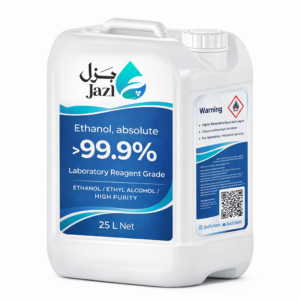
Example: 99.9% Medical-Grade Ethanol in 25 L Packaging
For small to medium scale use, our medical-grade 99.9% ethanol in 25 L containers is aligned with Ph.Eur. and suitable for laboratories and healthcare facilities that need controlled purity but flexible handling volumes.
This packaging size supports controlled dispensing in cleanroom and lab environments while limiting repeated large-vessel exposure that can raise moisture and contamination risks.
Core Distillation Principles Behind 99.9% Ethanol
Ethanol and water form an azeotrope near 95.6%, so reaching 99.9% requires more than simple single-column distillation. In pharma-grade manufacturing, we use multi-stage distillation with carefully controlled temperatures, pressures, and reflux ratios to push separation performance.
Key levers include column configuration, internal hardware such as trays or structured packing, and fractionation strategy across heads, heart, and tails. Each of these variables directly affects both ethanol purity and impurity carryover.
Fraction Management: Heads, Heart, and Tails
In the Areke optimization study, head and heart fractions showed substantially lower volatile acids, esters, and heavy metals than bottom and tail fractions, illustrating the value of precise cut selection. We apply similar logic at industrial scale, discarding or reprocessing impurity-rich fractions.
For pharmaceutical applications, we tune cut points so that the heart fraction becomes the primary source for pharma-grade product, while off-spec fractions feed back into recovery streams or are treated as waste depending on their impurity profile.
Ph.Eur. Alignment and Analytical Validation
We verify that our ethanol meets pharmacopeial standards for identity, purity, and contaminant limits with routine analytical testing. Techniques such as GC, HPLC, and ICP-based methods help quantify residual solvents and trace metals to confirm that distillation is delivering the required performance.
These analytics close the loop between process design and product quality, ensuring that optimization translates into measurable purity improvements.
Column Design, Structured Packing, and Reflux Optimization
Column design is one of the most powerful levers for achieving high-purity ethanol at scale. Two-column neutral-alcohol configurations can reach close to 90% ethanol recovery while reducing steam consumption significantly compared with traditional multi-column setups, which is attractive for pharma plants looking to balance purity and energy intensity.
In addition to column count and height, the choice of trays versus structured packing and the internal geometry of packing elements affect separation efficiency, pressure drop, and fouling behavior in long-term operation.
Enhancing Separation with Structured Packing
Recent studies show that CFD-optimized structured packing geometries can deliver around a 20% uplift in separation efficiency, which directly benefits ethanol purity at a given column height. We view these technology advances as a practical route to either higher purity, lower energy consumption, or both.
When we design or upgrade columns for pharma ethanol, we evaluate packing options against our feedstock impurities, target purity, and throughput to select the configuration that offers the best lifecycle performance.
Reflux Ratio and Energy Balance
Reflux ratio controls the internal liquid flow and directly influences the number of effective stages in a column. Higher reflux generally improves separation, but it also increases energy use and can challenge condenser capacity.
We use process modeling to find the point where incremental purity gains from higher reflux become marginal compared with additional steam or cooling demand, then lock that in as a design or control target.
Five factors drive pharma-grade ethanol purity. The infographic offers quick insights to optimize distillation for maximum purity in pharmaceutical applications.
Controlling Residual Solvents and Trace Impurities
Achieving 99.9% ethanol content is not enough if residual solvents exceed regulatory limits. Under USP <467> and ICH Q3C, methanol is a Class 2 solvent with a permitted daily exposure of 30 mg per day and a concentration limit of 3,000 ppm, which sets expectations for impurity control in solvent production.
In pharma-grade ethanol manufacturing, we therefore design distillation, rectification, and potential polishing steps to minimize methanol and other light impurities, then verify compliance through validated analytical workflows.
Analytical Verification of Distillation Performance
To confirm that our distillation units deliver on purity targets, we use techniques such as GC with headspace analysis for volatile impurities and HPLC for non-volatile organic contaminants. These methods align with pharmacopeial guidance on residual solvents and impurity profiling.
Regular sampling across batches and packaging formats also provides feedback for process tuning, so that we can adjust reflux, cut points, or even column hardware if trends indicate creeping impurity levels.
Importance of Fraction Separation for Impurity Control
The Areke re-distillation work showed that head and heart fractions contained markedly fewer volatile acids, esters, and heavy metals than bottoms and tails. We use a similar philosophy by treating the first and last portions of distillate with extra caution and reserving only the cleanest heart for pharma-grade output.
This strategy, combined with modern column design, allows us to maintain stringent impurity profiles suitable for sensitive lab and manufacturing applications.
Process Control Strategies for Stable Ethanol Purity
In continuous operation, even a well-designed column can drift if control strategies are not robust. Advanced control methods, such as model predictive control (MPC), have shown strong potential for handling multi-component feeds and disturbances in pharmaceutical evaporation and distillation systems.
We combine classical PID loops with higher-level optimization where appropriate to stabilize parameters like column pressure, reflux ratio, and distillate flow, which directly impact ethanol purity.
Real-Time Monitoring of Key Quality Indicators
Online analyzers and inferential models enable near real-time estimation of ethanol concentration and key impurities in distillate streams. By feeding this information back into our control system, we can adjust operating conditions before off-spec product accumulates.
For critical grades, we also design sampling protocols that bring laboratory confirmation into regular production reviews, particularly when feedstock quality shifts.
Batch versus Continuous Distillation in Pharma Contexts
Some applications favor batch distillation for flexibility and isolated campaign control, while others prefer continuous units for consistency and scale. In both cases, optimization involves balancing throughput, purity, and operational simplicity.
We evaluate each customer use case and choose the manufacturing route that best supports stable 99.9% purity with predictable lead times.
Jezyl Pharma-Grade Ethanol: Formats for Lab, Medical, and Industrial Use
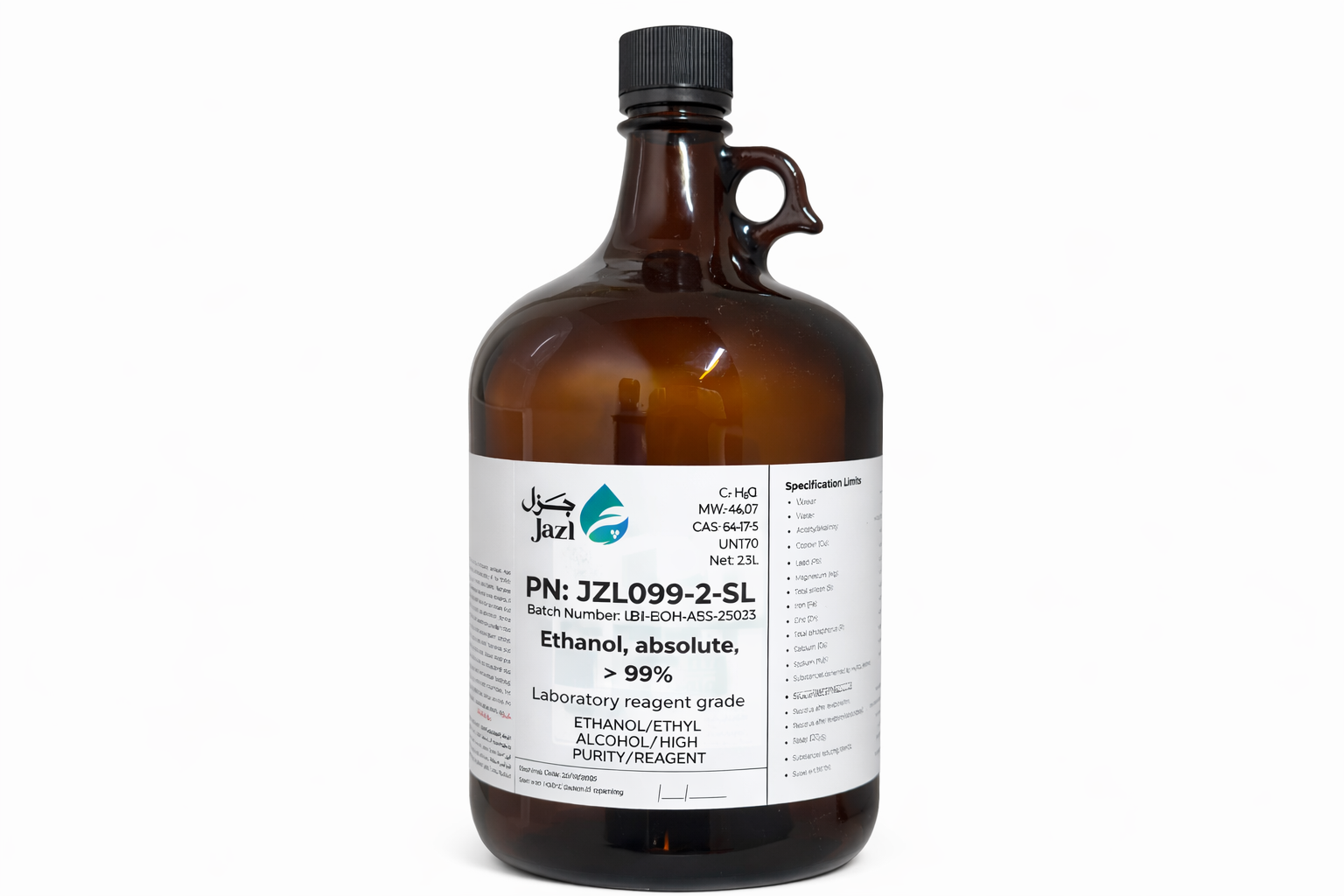
As a manufacturing plant, we produce high-purity ethanol under our pharma-focused Jezyl line. These products are tailored for laboratories, hospitals, and pharmaceutical manufacturers that require consistent 99.9% purity and traceable origin.
Our Jezyl offerings span multiple packaging formats so that procurement teams can match volume and logistics to their operations without compromising purity.
25 L and 2.5 L: Precision Volumes for Labs and Diagnostics
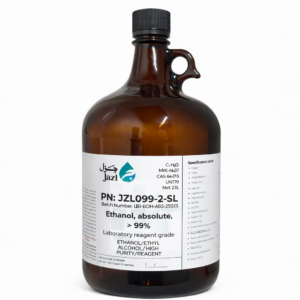
The 25 L medical-grade units provide a practical balance between volume and handling convenience in labs and clinical environments. For more targeted use in cosmetic and lab workflows, our 2.5 L high-purity ethanol packs support dilution, disinfectant preparation, and small-scale experiments.
Both volumes benefit from the same distillation and refining standards as our larger industrial formats, so users can expect consistent purity across pack sizes.
205–220 L Barrels, IBC, and ISO Tanks for Industrial Pharma Operations
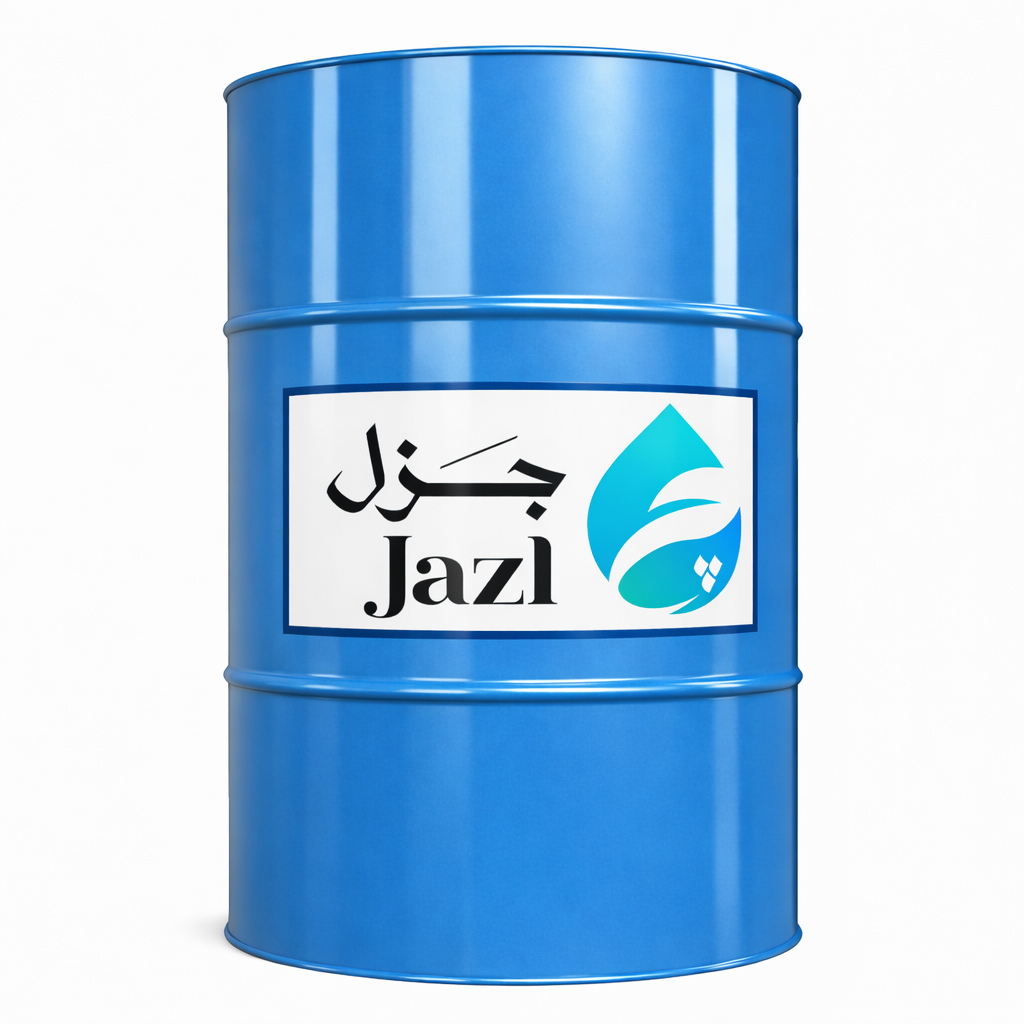
For large-scale pharmaceutical manufacturing and centralized hospital supply, we provide 205–220 L barrels, IBC tanks, and ISO tanks. These closed systems minimize moisture ingress and contamination during storage and transport.
Choosing the right bulk format depends on warehouse infrastructure, transfer systems, and consumption rates, which we routinely help B2B customers assess.
Red Sea 99.9% Anhydrous Ethanol for Perfumery and Industrial Use
Alongside pharma-grade Jezyl ethanol, we manufacture industrial-grade 99.9% ethanol under the Red Sea brand. This line is engineered for perfumery and general industrial applications where high purity is critical for performance, but regulatory framing differs from pharmaceutical use.
Red Sea ethanol still benefits from our same distillation expertise, so perfumery, cosmetics, and industrial customers can rely on consistent anhydrous quality.
ISO and IBC Tanks for High-Volume Industrial Users
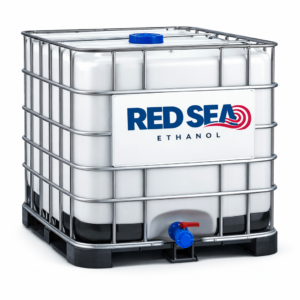
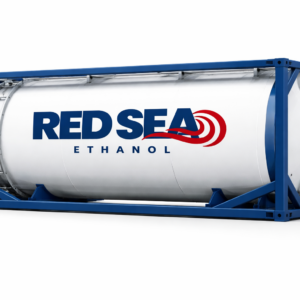
For fragrance houses and industrial users that consume large volumes, Red Sea ethanol is available in ISO and IBC tanks. These formats are ideal for centralized blending, formulation, and solvent processes.
Using bulk tanks also improves logistics efficiency across the GCC, MENA, and African markets, especially where production sites need regular high-volume deliveries.
205–220 L Barrels for Flexible Industrial Logistics
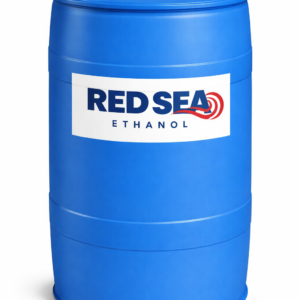
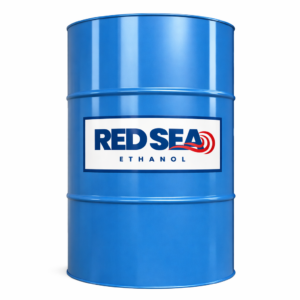
Our 205 L and 220 L Red Sea barrels support mid-scale operations and decentralized storage. They are especially useful for perfumery, cosmetics blending rooms, and contract manufacturers that operate multiple lines.
The barrels are filled under conditions that preserve anhydrous quality, helping users maintain predictable solvent performance in their formulations.
How to Detect Mislabeling and Verify Ethanol Quality
In many markets, ethanol is frequently mislabeled, with industrial or technical grades presented as equivalent to pharmaceutical quality. For regulated pharma and lab environments, relying on unverified product introduces significant quality and compliance risks.
Because we operate as a manufacturing plant, not only as a trader, we encourage buyers to adopt a structured verification approach when sourcing ethanol.
Documents and Data to Request from Suppliers
- Certificate of Analysis for each batch, including ethanol content, water, key impurities, and test methods.
- Specification sheet referencing applicable standards, such as Ph.Eur. or equivalent.
- Evidence of plant origin, including manufacturing location and basic process description.
- Information on packaging, closures, and any denaturants or additives, if present.
By reviewing these documents carefully, procurement teams can quickly identify gaps or inconsistencies that may indicate mislabeling.
Red Flags for Potential Mislabeling
Signs that should trigger further investigation include vague purity claims without supporting metrics, absence of batch-level COAs, and suppliers unable to confirm manufacturing origin. Extremely low prices relative to market averages can also warrant closer scrutiny.
We recommend establishing an approved-supplier list that favors direct manufacturers with transparent quality systems and documented ethanol production capabilities.
Bulk Procurement: Choosing the Right Packaging and Format
Once purity requirements are clear, the next optimization step is selecting the right packaging for your consumption pattern and infrastructure. Pharma and industrial buyers can choose from 2.5 L packs up to ISO tanks, each with its own logistics profile.
The goal is to balance handling safety, contamination control, cost per liter, and ease of integration into existing processes.
Comparison of Common Pharma Ethanol Formats
| Format | Typical Use | Key Advantages |
|---|---|---|
| 2.5 L | Labs, R&D, small-batch cosmetics | Easy handling, low wastage, good for multiple test protocols. |
| 25 L | Diagnostics labs, hospital units | Balanced volume, manageable size for manual handling or trolleys. |
| 205–220 L barrels | Pharma plants, perfumery, contract manufacturing | Lower cost per liter, compatible with drum pumps and centralized storage. |
| IBC tanks | High-volume pharma and industrial users | Bulk volume, palletized handling, good compromise between barrels and ISO tanks. |
| ISO tanks | Very high-volume, cross-border shipments | Maximum logistics efficiency and minimal packaging waste. |
What We Need from You for an Accurate Quote
- Required purity and grade (for example, 99.9% pharma grade or 99.9% industrial grade).
- Preferred packaging (2.5 L, 25 L, 205–220 L barrel, IBC tank, or ISO tank).
- Estimated monthly or annual volume, including any seasonality.
- Delivery location and any special handling requirements.
- Documentation needs, such as specific pharmacopeial references or certifications.
Providing this information upfront helps us size the right production and logistics plan for your operations.
Safe Handling, Storage, and Regulatory Considerations
Even when distillation is optimized and purity is high, ethanol must be handled with appropriate safety and regulatory controls. Pharma-grade ethanol is a flammable solvent, so storage facilities should provide adequate ventilation, explosion-protected equipment where needed, and compliant fire safety systems.
From a regulatory standpoint, users should align internal SOPs with local and international guidelines covering flammable liquids, hazardous substances, and solvent waste management.
Storage Practices that Help Preserve Purity
To keep anhydrous ethanol near 99.9%, we recommend minimizing repeated opening of large containers, using sealed transfer lines where possible, and avoiding prolonged exposure to humid environments. Appropriate gaskets and closures also reduce the risk of contamination.
For bulk tanks, periodic inspection and cleaning schedules help maintain internal cleanliness and prevent buildup that might affect purity over time.
Integration into Quality Management Systems
Pharmaceutical and hospital users typically integrate ethanol handling, sampling, and testing into their broader quality systems. This includes defining acceptance criteria on incoming batches, storage conditions, and shelf-life controls for opened containers.
We support these efforts by providing consistent batch documentation and by aligning our production practices with the expectations of regulated customers in Saudi Arabia, the GCC, and wider MENA and African markets.
Conclusion
Optimizing pharma ethanol distillation for maximum purity is a combined effort of robust column design, precise fraction management, advanced process control, and rigorous analytical verification. When these elements are aligned, it is realistic to achieve 99.9% anhydrous ethanol that meets stringent pharmaceutical and laboratory requirements.
As a dedicated ethanol manufacturing plant serving Saudi Arabia, the GCC, MENA, and African markets, we focus on producing high-purity ethanol under our Jezyl and Red Sea brands, paired with the documentation, packaging options, and technical support that B2B buyers need. To discuss your purity specifications and bulk requirements, we invite you to request a quote so we can align our production capabilities with your operational goals.
